
















What Are the Key Criteria for Selecting Oil Production Pumps?
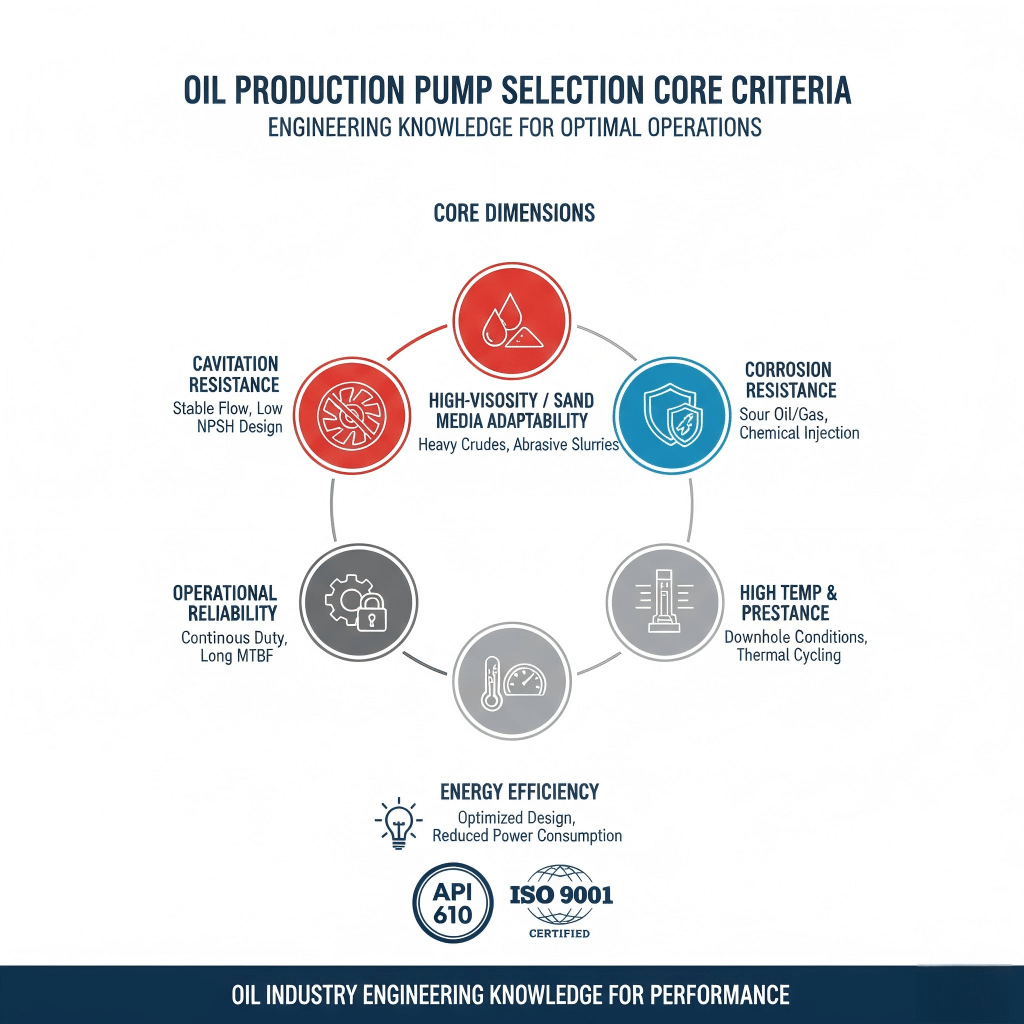
Oil production scenarios are characterized by harsh and complex operating conditions, including high-viscosity crude oil (heavy oil, extra-heavy oil), sand-containing media, sour crude corrosion, high-temperature and high-pressure downhole environments, and long-term continuous operation requirements. As core auxiliary equipment in the oil production industry, pumps directly affect the efficiency, safety, and economic benefits of crude oil extraction, gathering, and transportation. Selecting suitable oil production pumps must prioritize five core dimensions: adaptability to high-viscosity and sand-containing media, corrosion resistance (especially to sour crude), high-temperature and high-pressure tolerance, long-term continuous operational reliability, and compliance with industry authoritative standards.
International industry standards are the fundamental guarantee for the quality and performance of oil production pumps. Pumps used in key oil production processes must comply with API 610 standard (Centrifugal Pumps for Petroleum, Petrochemical and Natural Gas Industries) and ISO 9001 quality management system certification. These standards strictly regulate the design, material selection, manufacturing process, and performance testing of pumps, requiring oil production pumps to achieve 8000+ hours of continuous stable operation annually with a failure rate of less than 0.8 times per year. According to industry statistics, the energy consumption of pump systems accounts for 15-20% of the total auxiliary power consumption of oil production fields, and the application of high-efficiency oil production pumps can reduce this proportion by 4-6 percentage points, significantly reducing production costs.
Operating Condition Matching for Oil Production Pumps
Accurate matching of pump operating conditions with oil production process requirements is the premise of ensuring efficient and safe operation. The following table lists the key operating condition parameters that need to be clarified for pump selection, combining typical process links such as crude oil extraction, gathering and transportation, oilfield wastewater treatment, and fracturing fluid circulation:
Operating Condition Category | Key Parameters to Confirm | Remarks for Oil Production Scenarios |
|---|---|---|
Medium Characteristics | Medium type (crude oil, sand-containing crude oil, oilfield produced water, fracturing fluid, chemical agent), viscosity (cSt), density (kg/m³) | Core focus: Pump’s adaptability to high viscosity and compatibility with oilfield chemical agents |
Solid Content & Particle Size | Solid content (%), maximum particle size (mm), particle type (sand, clay, corrosion products) | Affects wear resistance of pump flow components (critical for sand-containing crude oil transportation) |
Temperature & Corrosiveness | Operating temperature (℃), pressure (MPa), pH value, corrosive intensity (sour crude corrosion, saltwater corrosion, H₂S/CO₂ content) | Critical factor for material selection (e.g., sour crude requires anti-sulfide corrosion materials) |
Operation Mode | Continuous operation (24h/365) or intermittent operation, annual operating hours, load fluctuation range | Most oil production processes adopt continuous operation; pumps need high fatigue resistance |
Installation Requirements | Dry-type/Submersible/Vertical/Horizontal/Belt-driven installation, oilfield wellsite/pump station space constraints, offshore/onshore environment | Submersible pumps preferred for deep well extraction; vertical pumps for limited pump station space; offshore pumps require anti-corrosion to seawater |
Common Pump Types in Oil Production & Their Core Advantages

Different process links in oil production have distinct requirements for pump performance. The following table lists the most widely used pump types (high-frequency Google search keywords) and their core advantages in this scenario:
Pump Type | Core Advantages | Applicable Process Links |
|---|---|---|
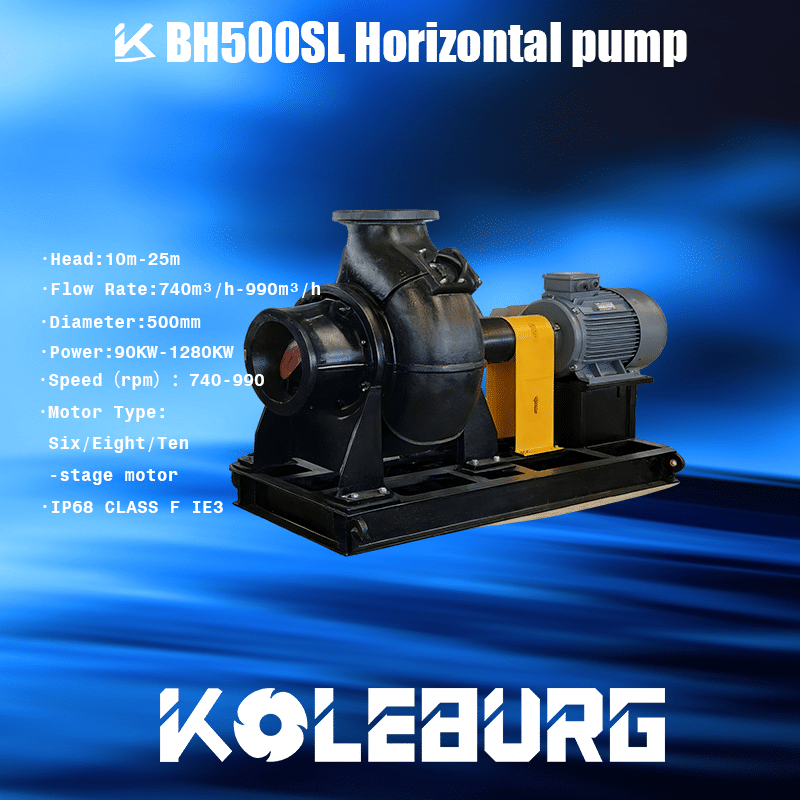
Excellent adaptability to high-viscosity crude oil, strong wear resistance, stable flow output, suitable for medium-pressure crude oil transfer (pressure up to 15MPa) | Crude oil gathering and transportation, oilfield surface transfer | |
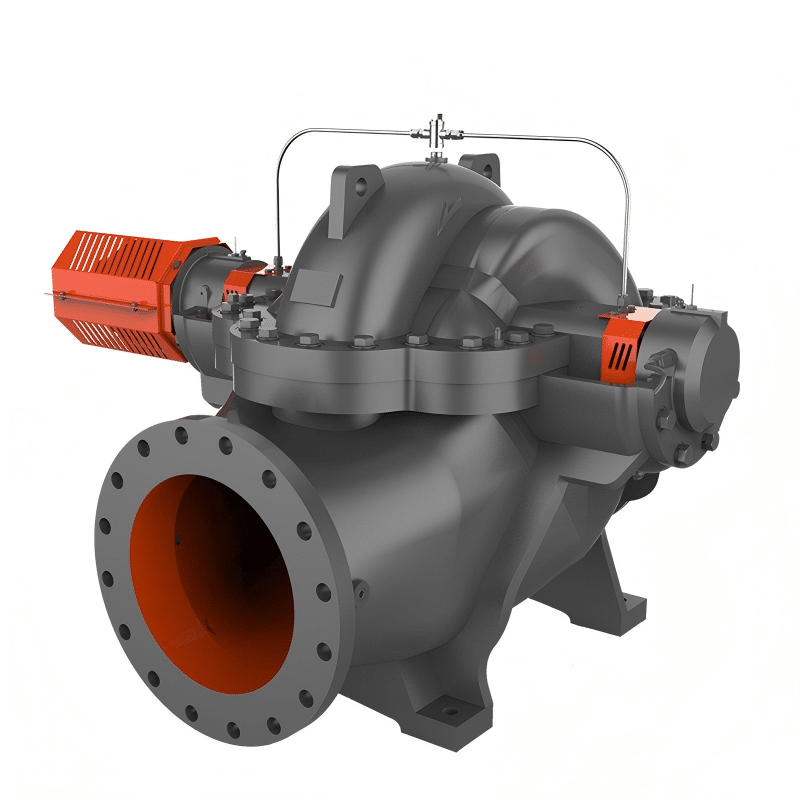
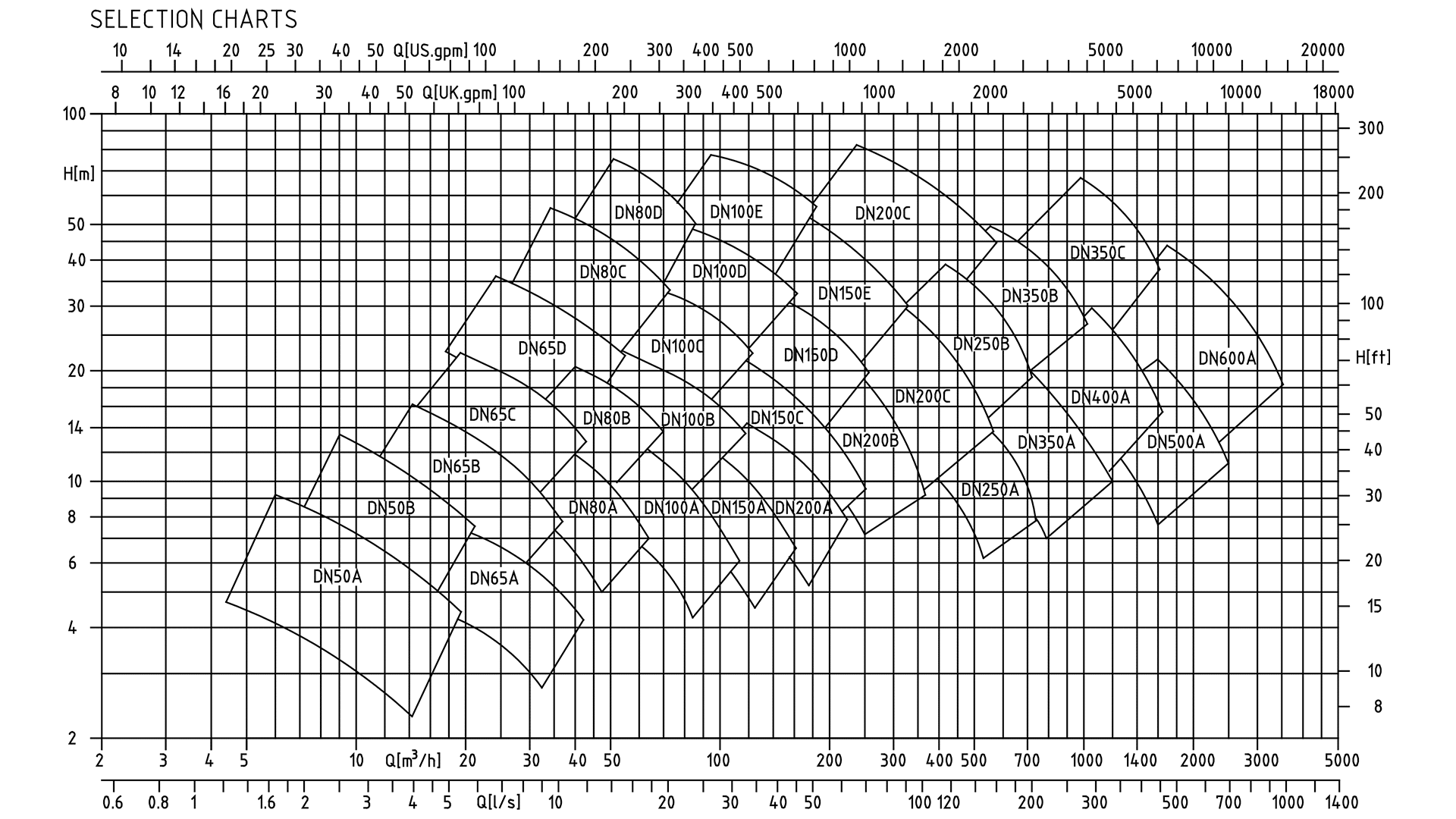
Large flow capacity (up to 3000m³/h), balanced axial force, low vibration, high operational efficiency (up to 92%), suitable for large-scale crude oil storage and transportation | Oil depot crude oil transfer, large-scale oilfield water injection system | |
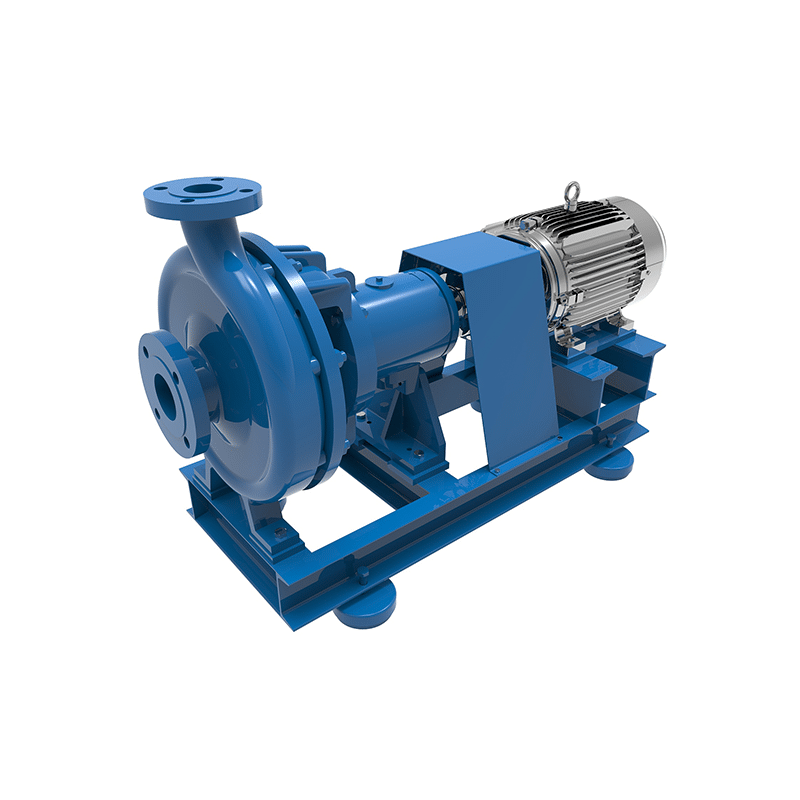
Compact structure, direct pipeline installation, good oil resistance, low energy consumption, easy maintenance, suitable for medium and low pressure pipeline transportation | Oilfield chemical agent circulation, auxiliary oil transfer pipeline | |
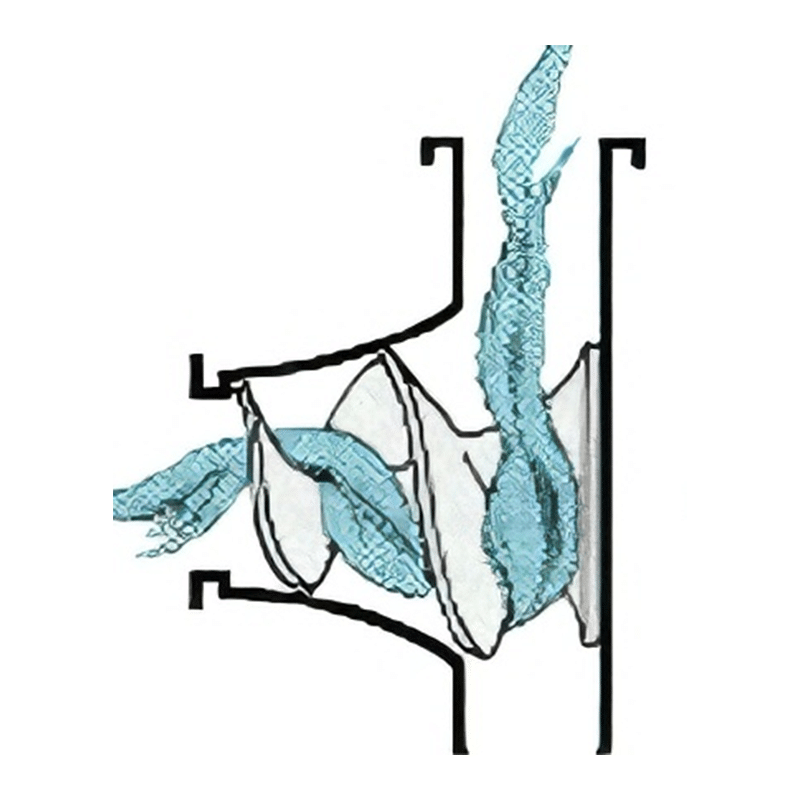
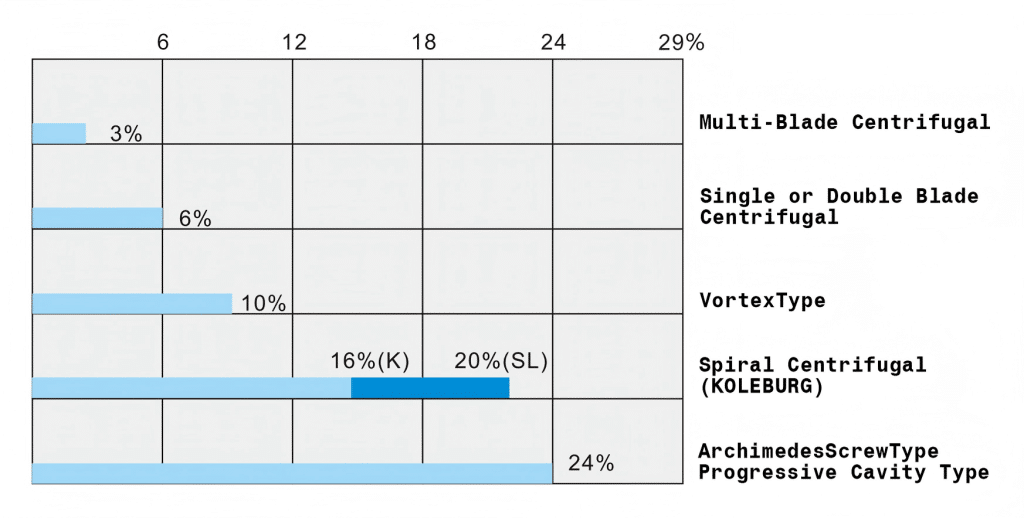
Progressive Cavity Pump | Strong anti-clogging performance, excellent adaptability to high-sand (solid content up to 20%) and high-viscosity media, stable output under variable working conditions | Sand-containing crude oil extraction, heavy oil production, offshore oilfield extraction |
Submersible Oil Pump | Suitable for deep well oil extraction (depth up to 3000m), compact structure, strong power, can adapt to high-temperature (up to 150℃) downhole environment | Deep well crude oil extraction, offshore oilfield production |
Screw Pump | Good self-priming performance, low noise, strong adaptability to high-viscosity and high-solid-content media, suitable for small and medium flow oil extraction | Heavy oil well extraction, marginal oilfield development |
What is an Oil Production Pump?
An oil production pump is a specialized pump product designed for the harsh and complex working conditions of the oil production industry, which is a high-search-volume keyword on Google. It refers to pumps that can stably operate under conditions of high viscosity, high sand content, high temperature, high pressure, and strong corrosion, undertaking core tasks such as crude oil extraction, gathering and transportation, oilfield produced water treatment, and fracturing fluid circulation in oil production fields (onshore and offshore). The reliability and efficiency of oil production pumps directly determine the production capacity and economic benefits of oilfields.
According to the application links, oil production pumps can be classified into three categories: extraction pumps (used for downhole crude oil extraction, such as submersible oil pumps, progressive cavity pumps), transportation pumps (used for surface crude oil gathering and transportation, such as oilfield centrifugal pumps, double suction pumps), and auxiliary pumps (used for oilfield produced water treatment, chemical agent circulation, such as pipeline pumps, sewage centrifugal pumps). Each type of pump has targeted design improvements for its specific application scenarios.
The working principle of oil production pumps is mainly based on centrifugal force or positive displacement: centrifugal oil production pumps (e.g., oilfield centrifugal pumps) rely on high-speed rotating impellers to realize media boosting and transportation, suitable for large flow and medium pressure scenarios; positive displacement oil production pumps (e.g., progressive cavity pumps, screw pumps) rely on the volume change of sealed cavities to transport media, suitable for high viscosity and high solid content scenarios. Core performance indicators include maximum operating temperature (up to 180℃), maximum working pressure (up to 40MPa), adaptability to viscosity (up to 10000 cSt), solid content tolerance (up to 25%), and annual reliability (≥99%).
Compared with pumps in other industrial scenarios (such as water treatment, power generation), oil production pumps have the following distinct characteristics:
- Strong adaptability to complex media: Can stably operate in high-viscosity, high-sand, and corrosive media environments, which is the core difference from ordinary industrial pumps.
- Excellent wear and corrosion resistance: Key components adopt special wear-resistant and anti-corrosion materials (such as high-chromium alloy, duplex stainless steel), which can withstand long-term erosion of sand particles and sour crude.
- High reliability for long-term continuous operation: Designed for 24h/365 continuous operation in harsh oilfield environments, the average service life of key components is more than 8 years, and the overhaul interval is more than 3 years.
- Diversified installation and structural forms: There are submersible, vertical, horizontal and other installation forms to adapt to the diverse environments of onshore oilfields, offshore platforms, and deep wells.
Oil Production Centrifugal Pump Components & Material Selection

Oil production centrifugal pumps operate under harsh conditions such as high viscosity, sand-containing wear, and oil corrosion, requiring strict material selection for components. All materials must comply with API 610 standard requirements and pass wear resistance, corrosion resistance, and high-temperature performance tests. The following table lists recommended materials for key components, combining industry application practices and international standard requirements:
Pump Component | Recommended Materials | Advantages for Oil Production Scenarios |
|---|---|---|
316L Stainless Steel, Duplex 2205, Wear-Resistant Cast Iron (HT250 with wear-resistant coating) | Excellent oil corrosion resistance and sand wear resistance; high mechanical strength to withstand medium and high pressure (up to 25MPa) | |
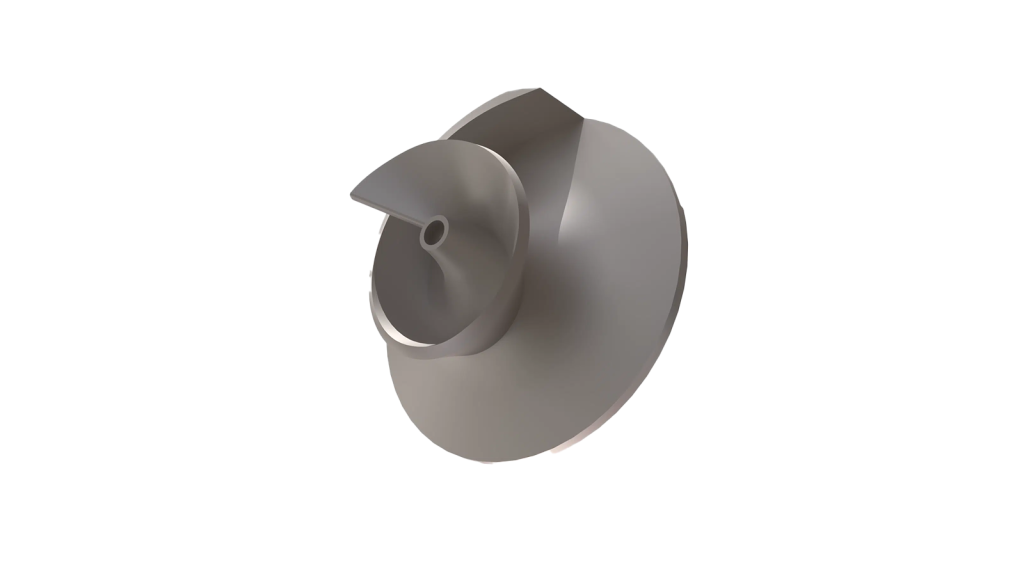
High-Chromium Alloy (Cr27), Duplex 2205, Nickel-Based Alloy (Inconel 625) | Strong wear resistance against sand-containing crude oil (service life 3-5 times that of ordinary materials); stable dynamic balance performance for long-term high-speed operation (up to 3600r/min) | |
42CrMo Alloy Steel, 316L Stainless Steel, Titanium Alloy | High fatigue resistance and toughness; oil corrosion resistance and sulfide stress cracking resistance to ensure stable rotation under continuous operation | |
SiC-SiC, PTFE-Coated Seal Ring, Oil-Resistant Graphite (with anti-coking treatment) | Excellent oil resistance and high-temperature resistance (up to 180℃), tight sealing to avoid crude oil leakage; anti-coking treatment adapts to high-temperature crude oil | |
FKM (Viton), Nitrile Rubber (NBR), Perfluoroelastomer | FKM and perfluoroelastomer resist high temperature and strong oil corrosion; nitrile rubber is cost-effective for general oilfield media (temperature ≤120℃) |
Energy Efficiency and Operational Reliability of Oil Production Pumps
Energy efficiency optimization is an important direction for reducing production costs in oilfields. Under the premise of ensuring reliability, improving the energy efficiency of pump systems can effectively reduce auxiliary power consumption. The following table compares the energy efficiency of high-efficiency and ordinary oil production pumps, and the energy-saving effect of transformation schemes:
Pump Type/Transformation Scheme | Energy Efficiency Rate (%) | Annual Energy Savings (kWh/unit) |
|---|---|---|
Ordinary Oilfield Centrifugal Pump (IE2 Motor) | 72-78 | 0 (Reference Benchmark) |
High-Efficiency Oilfield Centrifugal Pump (IE4 Motor) | 86-94 | 12,000-18,000 |
Variable Frequency Transformation (VFD) for Oil Production Pumps | 88-95 | 30,000-50,000 (based on 500m³/h flow pump) |
Operational reliability is the core requirement for oil production pumps. Pumps complying with API 610 and ISO 9001 standards have a failure rate 45-55% lower than ordinary industrial pumps, which can effectively reduce unplanned downtime and avoid production losses. Key reliability improvement measures include:
- Strict material selection and quality control: All components must pass strict performance tests, and key wear parts adopt interchangeable design to facilitate maintenance and replacement.
- Regular maintenance and inspection: Conduct periodic non-destructive testing (NDT) on key components such as impellers and pump shafts, and carry out anti-corrosion and wear-resistant treatment on the pump body regularly.
- Intelligent monitoring and early warning system: Install sensors to monitor parameters such as pump vibration, temperature, pressure, and seal leakage in real time, realizing fault early warning and reducing unplanned downtime by 65%.
Application Case of Pumps in Oil Production
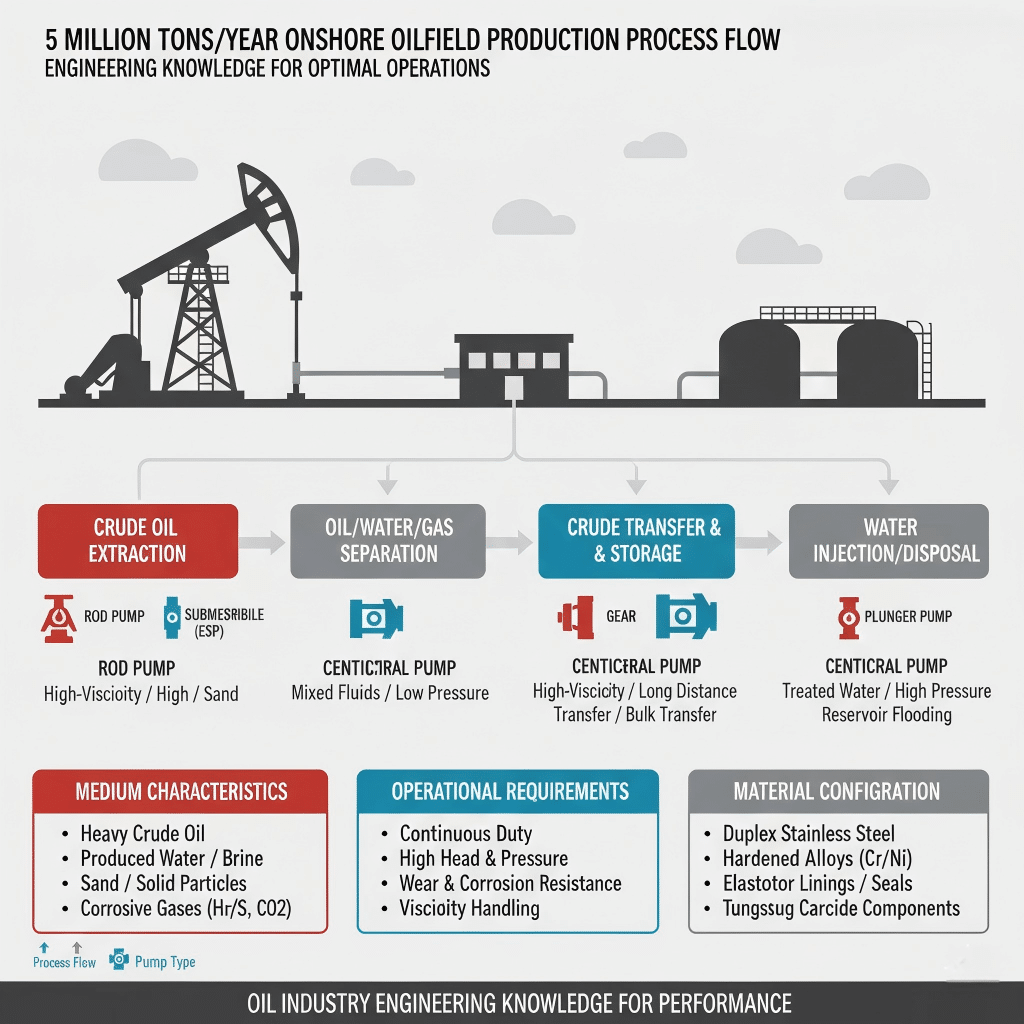
This case involves a large-scale onshore oilfield with an annual crude oil production capacity of 5 million tons. The oilfield’s core processes include deep well crude oil extraction, surface crude oil gathering and transportation, oilfield produced water treatment, and fracturing fluid circulation. The key requirements are that pumps adapt to high-viscosity (5000-8000 cSt) and high-sand (solid content 8-12%) crude oil, withstand high-temperature (120-150℃) and high-pressure (18-22MPa) working conditions, comply with API 610 standards, and meet the latest energy efficiency requirements.
Project Background and Requirements
Process Link | Medium Characteristics | Operational Requirements |
|---|---|---|
Deep Well Crude Oil Extraction | High-viscosity sand-containing crude oil, viscosity 6000 cSt, solid content 10%, temperature 140℃, pressure 20MPa | Submersible installation, continuous operation, anti-clogging, wear resistance, operational rate ≥99.5% |
Surface Crude Oil Gathering and Transportation | Crude oil, viscosity 3000 cSt, solid content 5%, temperature 120℃, pressure 12MPa | Large flow (800m³/h), high efficiency, stable operation, energy efficiency rate ≥90% |
Oilfield Produced Water Treatment | Oilfield produced water, oil content 5%, salt content 15%, pH 7-8, slight corrosion | Corrosion resistance, anti-clogging, flow rate 500m³/h, stable output |
Fracturing Fluid Circulation | Fracturing fluid, high viscosity, solid content 8%, temperature 80℃, pressure 15MPa | Intermittent operation, strong adaptability to variable working conditions, easy maintenance |
Pump Selection and Configuration Scheme
Process Link | Selected Pump Type | Material Configuration & Key Technology |
|---|---|---|
Deep Well Crude Oil Extraction | Submersible Oil Pump | Impeller: High-Chromium Alloy (Cr27); Pump shaft: 42CrMo Alloy Steel; Equipped with downhole temperature and pressure monitoring system |
Surface Crude Oil Gathering and Transportation | Pump body: Duplex 2205; Impeller: Inconel 625; IE4 motor + VFD variable frequency control | |
Oilfield Produced Water Treatment | Pump body: 316L Stainless Steel; Impeller: 316L Stainless Steel; Anti-clogging flow channel design | |
Fracturing Fluid Circulation | Progressive Cavity Pump | Stator: High-temperature resistant rubber; Rotor: High-Chromium Alloy; Quick-dismantling structure for easy maintenance |
Project Operation Effect
Evaluation Index | Design Target | Actual Operation Result |
|---|---|---|
Pump Operational Rate | ≥99.5% | 99.85% |
Average Energy Efficiency Rate | ≥88% | 93.2% |
Annual Energy Savings | ≥2.0 million kWh | 2.8 million kWh |
Failure Rate | ≤1 time/year | 0 times in 2 years |
Standard Compliance | Meet API 610, ISO 9001 | Fully compliant, passed third-party authoritative inspection |