















Key Criteria for Selecting Pumps in Pulp & Paper Industry?
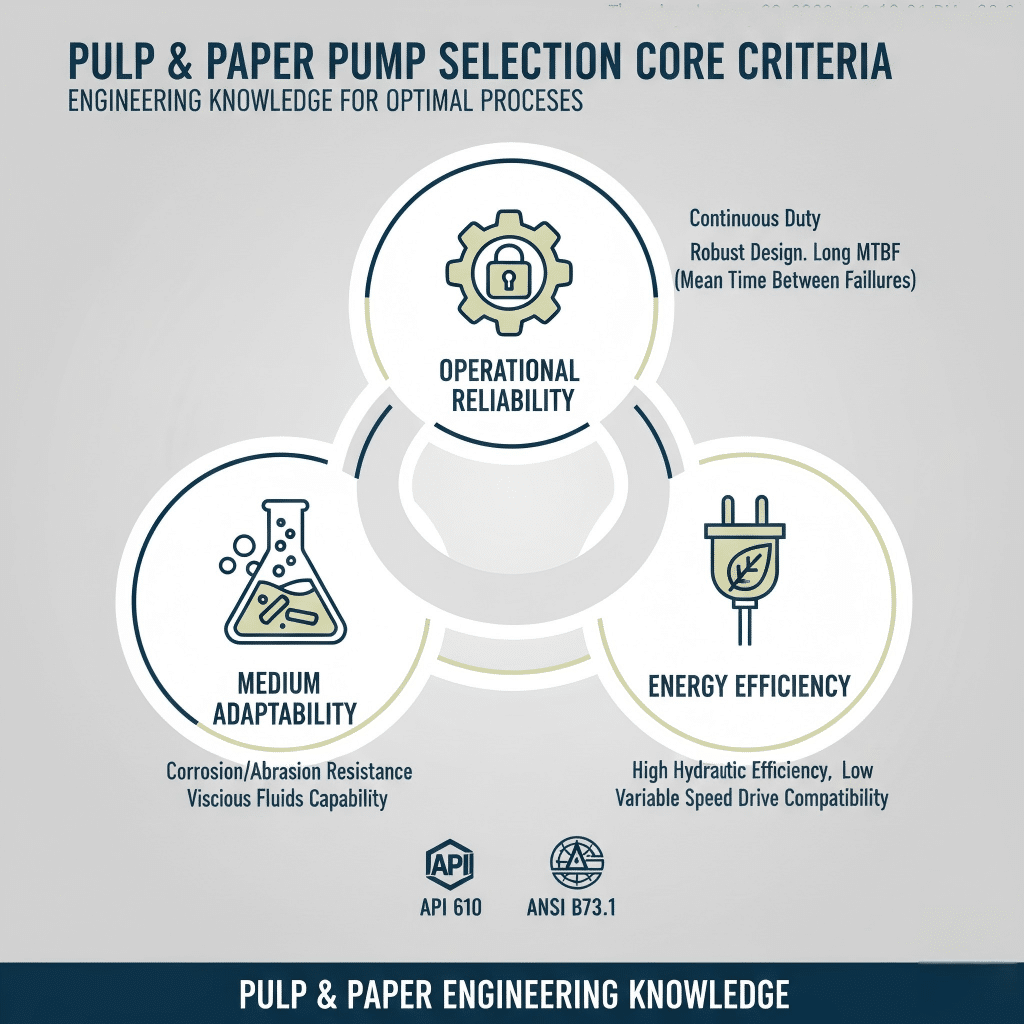
The pulp & paper industry features harsh operating conditions such as high-fiber media, corrosive liquors , and continuous 24/7 operation requirements. Selecting suitable pumps must comprehensively consider three core dimensions: medium adaptability, operational reliability, and energy efficiency. Medium adaptability focuses on anti-clogging and anti-abrasion performance to cope with high-fiber and high-solid-content media; operational reliability requires pumps to maintain stable operation under long-term continuous working conditions, with low failure rates; energy efficiency needs to meet the industry’s low-carbon development requirements, as pump energy consumption accounts for approximately 15% of the total energy consumption of pulp & paper processes.
Key technical indicators for pump selection include flow rate stability, head adaptability, material corrosion resistance, and mechanical seal tightness. Pumps that comply with API 610 standard and ANSI B73.1 standard are preferred, as these standards ensure the pump’s structural design, material quality, and performance parameters meet the rigorous requirements of the pulp & paper industry.
How to Match Pump Operating Conditions with Pulp Mill Requirements?
Accurate matching of pump operating conditions with pulp mill process requirements is the premise of ensuring stable production. The following table lists the key operating condition parameters that need to be clarified for pump selection in the pulp & paper industry:
Operating Condition Category | Key Parameters to Confirm | Impact on Pump Selection |
|---|---|---|
Medium Characteristics | Medium type (pulp, black liquor, white liquor, wood chips), fiber content, solid content (%) | Determines pump anti-clogging performance and material corrosion resistance |
Solid Particle Parameters | Maximum particle size (mm), particle hardness | Affects impeller structure design and wear-resistant material selection |
Thermal & Corrosive Properties | Operating temperature (℃), pH value, corrosive intensity | Decides the material grade of pump components (e.g., stainless steel, alloy) |
Operational Mode | Continuous operation (24h/365) or intermittent operation, annual operating hours | Influences pump structural strength and fatigue resistance design |
Installation Requirements | Dry-type/Submersible/Vertical/Horizontal/Belt-driven installation | Determines pump type and structural layout |
What Are the Common Pump Types in Pulp & Paper Industry?
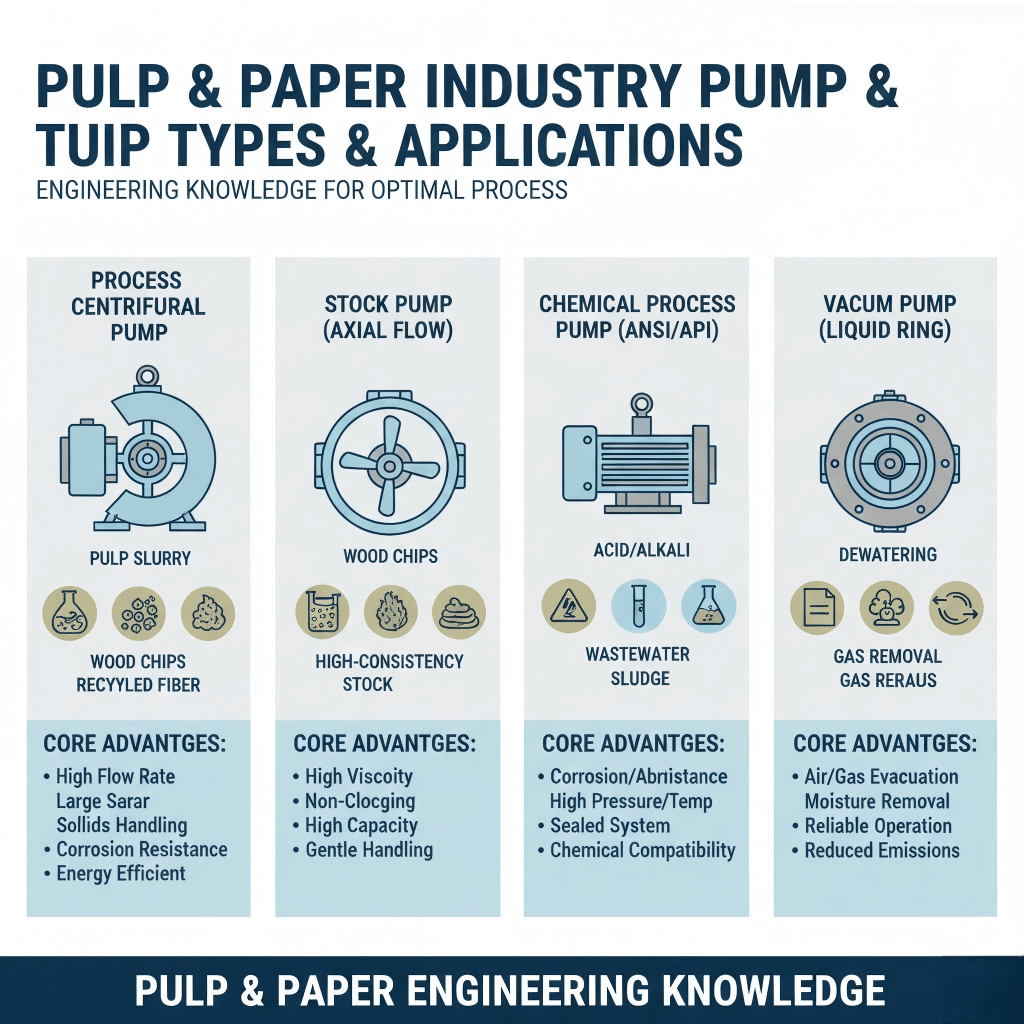
Different process links in the pulp & paper industry have distinct requirements for pumps. The following are the most widely used pump types and their core advantages, which are also the high-frequency search keywords in Google:
Pump Type | Core Advantages | Applicable Process Links |
|---|---|---|
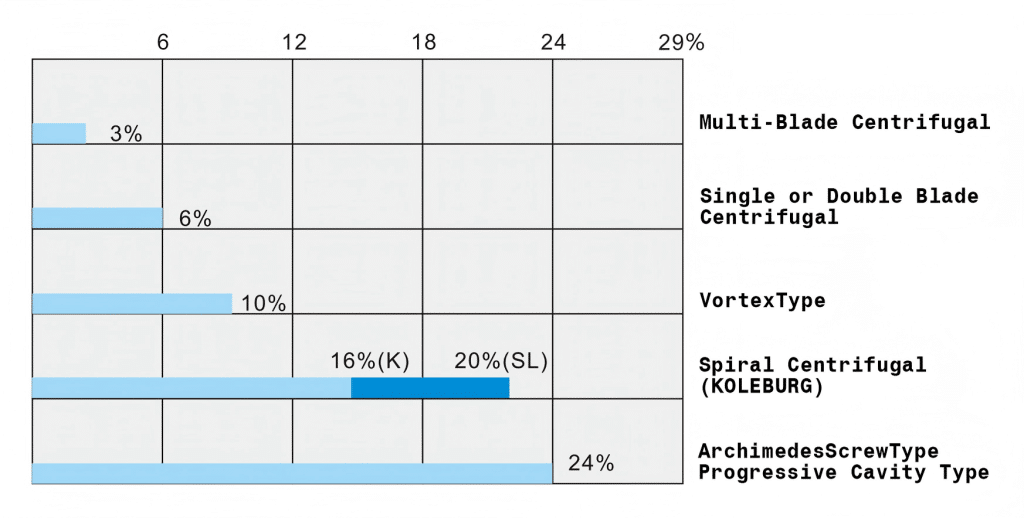
High operational efficiency (up to 85-90%), stable flow output, low maintenance cost | Low-consistency pulp transportation, white water circulation | |
Excellent anti-fiber-winding performance, strong anti-clogging ability, stable operation under high consistency | High-consistency pulp (15-30%) transportation, pulp washing process | |
Dry-type Sewage Centrifugal Pump | Equipped with dry-running protection function, strong corrosion resistance, suitable for harsh working conditions | Fibrous wastewater discharge, pulp mill sewage treatment |
Compact structure, small floor space, direct pipeline installation, low energy consumption | Black liquor/white liquor circulation, cooling water system |
What is a Wood Chip Pump?
Wood chip pump is a specialized pump type developed for the wood chip feeding process in the pulp & paper industry, which is a high-search-volume keyword in Google. It is mainly used to transport wood chip-solid-liquid mixtures, and its core design concept focuses on solving the problems of wood chip accumulation and pipeline blockage during transportation.
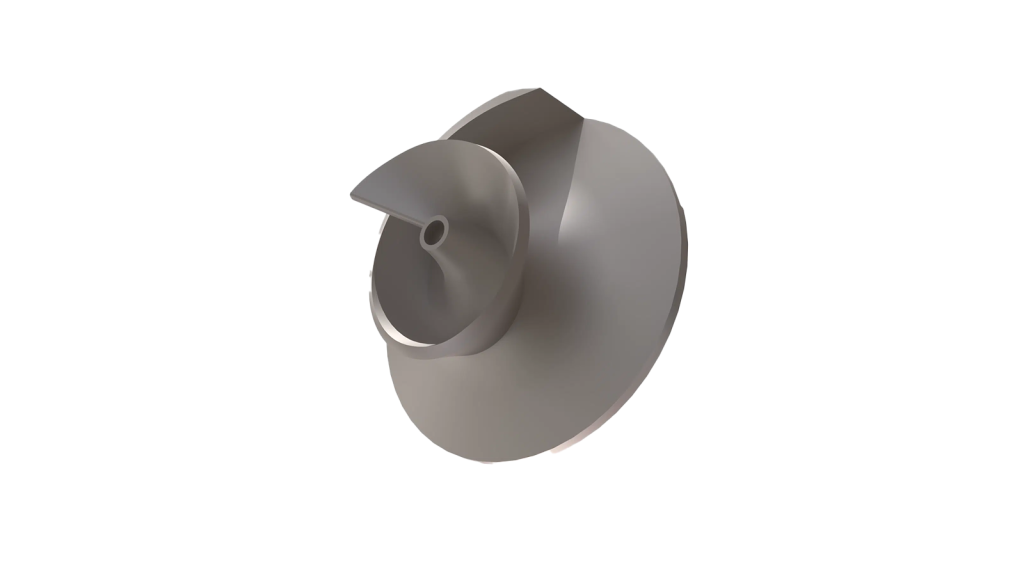
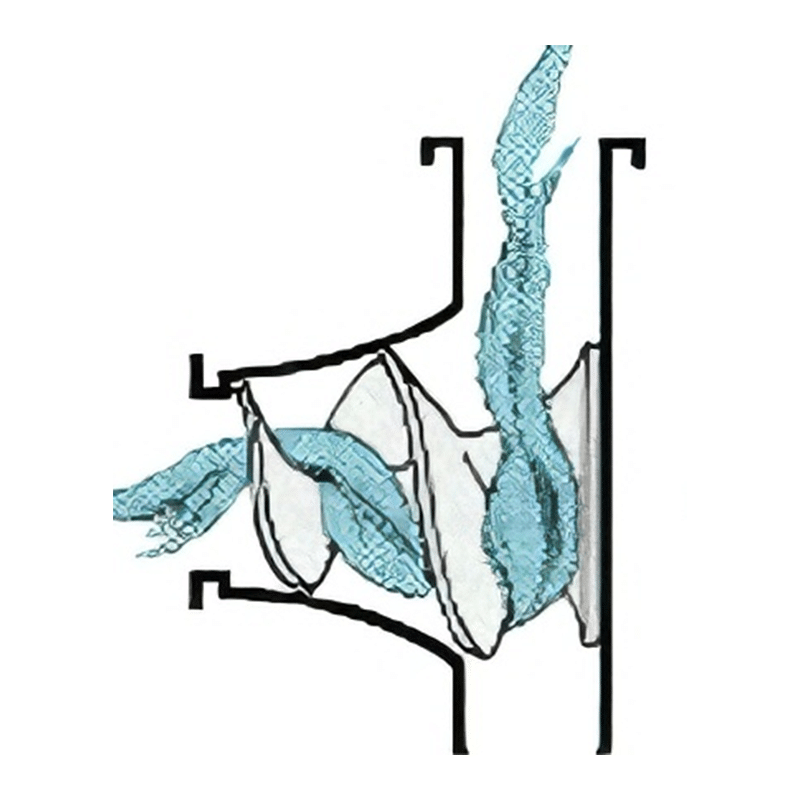
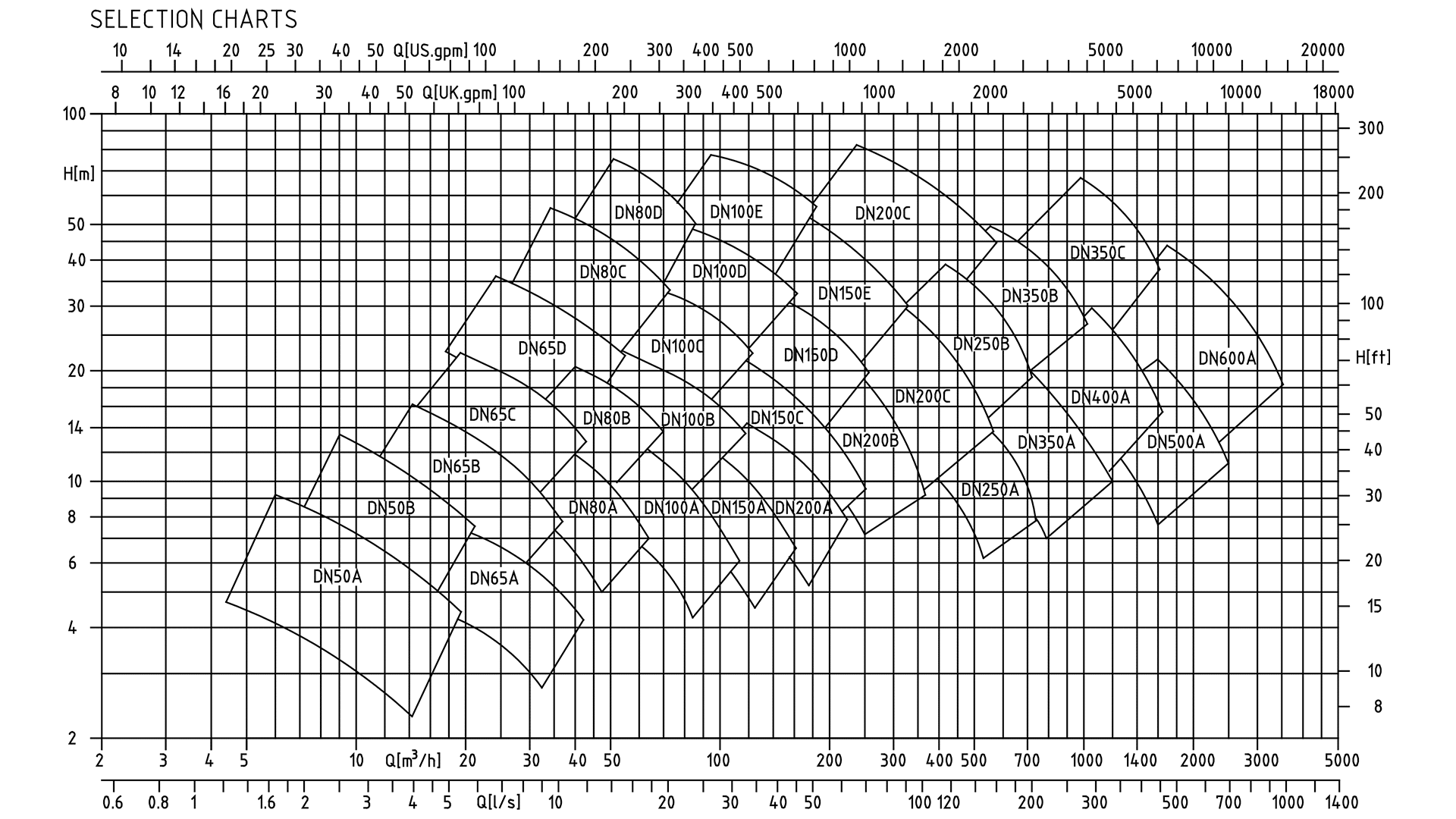
The working principle of wood chip pump is based on the centrifugal force generated by the high-speed rotation of the impeller. The optimized open impeller structure with large flow channels can effectively avoid fiber winding and wood chip blocking. At the same time, the pump body is designed with a large inlet and outlet diameter to ensure the smooth passage of large-size wood chips. The key performance indicators of wood chip pumps include: maximum wood chip particle size (up to 50mm), solid content adaptability (up to 25%), and head range (10-50m).
Compared with other common pumps in the pulp industry, wood chip pumps have the following unique advantages:
- Superior anti-clogging performance: The large-channel impeller and streamlined pump cavity design minimize the risk of wood chip accumulation.
- Strong transportation capacity: It can stably transport wood chip mixtures with high solid content, meeting the continuous feeding requirements of pulp mills.
- Good wear resistance: Key components are made of high-strength wear-resistant materials, which can withstand the abrasion of wood chips.
- Easy maintenance: The split-type pump body design allows for quick disassembly and maintenance, reducing downtime.
Material Selection for Pulp & Paper Industry Pumps

The material selection of pump components directly affects the service life and operational reliability of pumps in the pulp & paper industry. The harsh working environment (corrosive liquors, fibrous abrasion) requires pump materials to have excellent corrosion resistance and wear resistance. The following table lists the recommended materials for key pump components:
Pump Component | Recommended Materials | Applicable Scenarios |
|---|---|---|
304/316L Stainless Steel, QT500-7, HT200 | 304/316L for corrosive media (black liquor); QT500-7 for wood chip pumps; HT200 for general pulp transportation | |
High-chromium Alloy, Duplex 2205, 316L Stainless Steel | High-chromium alloy for wood chip pumps; Duplex 2205 for strong corrosive media; 316L for general pulp | |
42CrMo Alloy Steel, 316L Stainless Steel | 42CrMo for high-strength requirements; 316L for corrosive environments | |
SiC-SiC, PTFE-coated Seal Ring | SiC-SiC for high temperature and abrasion; PTFE-coated for corrosive liquors | |
FKM, EPDM | FKM for high temperature and oil resistance; EPDM for alkaline media (white liquor) |
Energy Efficiency and Operational Reliability of Pulp & Paper Industry Pumps
Energy consumption is a key concern in the pulp & paper industry. Pumps, as the main energy-consuming equipment, their energy efficiency directly affects the production cost of pulp mills. According to industry data, the energy consumption of pulp & paper industry pumps accounts for 15-20% of the total energy consumption of the entire production process. Improving pump energy efficiency can effectively reduce production costs and meet the requirements of green and low-carbon development.
The main measures to improve pump energy efficiency include: selecting high-efficiency pump models (such as IE3/IE4 high-efficiency motors), optimizing pump operating parameters (matching actual flow and head requirements), and regular maintenance to ensure pump operating efficiency. The following table shows the energy efficiency comparison between high-efficiency pumps and ordinary pumps in the pulp & paper industry:
Pump Type | Energy Efficiency Rate (%) | Annual Energy Savings (kWh/unit) |
|---|---|---|
High-efficiency Centrifugal Pump | 85-90 | 12,000-15,000 |
Ordinary Centrifugal Pump | 70-75 | 0 (Reference Benchmark) |
Operational reliability is another key indicator of pulp & paper industry pumps. The continuous 24/7 production mode of pulp mills requires pumps to have a low failure rate. The main factors affecting pump reliability include material selection, structural design, and maintenance level. Pumps that comply with API 610 standard have a failure rate 30-40% lower than ordinary pumps, and their average service life can reach 5-8 years.
Application Case of Pumps in Pulp & Paper Industry

This case involves a large-scale pulp mill with an annual output of 1.2 million tons of chemical pulp. The mill’s production process includes wood chip feeding, pulp cooking, pulp washing, and wastewater treatment. The key challenge is to ensure the stable transportation of wood chips and corrosive liquors, and meet the requirements of low energy consumption and high reliability.
Project Background and Requirements
Process Link | Medium Characteristics | Operational Requirements |
|---|---|---|
Wood Chip Feeding | Wood chip-solid-liquid mixture, solid content 20-25%, maximum particle size 40mm | Continuous operation, anti-clogging, head 35m, flow rate 180m³/h |
Black Liquor Circulation | Black liquor, pH 11-13, temperature 80-90℃, corrosive | High corrosion resistance, flow rate 250m³/h, head 45m |
Pulp Washing | High-consistency pulp (25-30%), fibrous, solid content 25% | Anti-fiber-winding, stable flow, head 30m |
Wastewater Treatment | Fibrous wastewater, pH 6-8, solid content 5-8% | Dry-running protection, anti-clogging, flow rate 300m³/h |
Pump Selection and Configuration Scheme
Process Link | Selected Pump Type | Material Configuration |
|---|---|---|
Wood Chip Feeding | Pump body: QT500-7; Impeller: High-chromium Alloy; Pump shaft: 42CrMo | |
Black Liquor Circulation | Pump body: 316L Stainless Steel; Impeller: Duplex 2205; Mechanical seal: SiC-SiC | |
Pulp Washing | Pump body: 304 Stainless Steel; Impeller: 316L Stainless Steel | |
Wastewater Treatment | Dry-type Sewage Centrifugal Pump | Pump body: HT200; Impeller: High-chromium Alloy; O-ring: EPDM |
Project Operation Effect
Evaluation Index | Design Target | Actual Operation Result |
|---|---|---|
Pump Operational Rate | ≥99% | 99.6% |
Average Energy Consumption | ≤0.8 kWh/m³ | 0.65 kWh/m³ |
Failure Rate | ≤2 times/year | 1 time/year |
Service Life | ≥5 years | Estimated 6.5 years (based on 2-year operation data) |