











What is a Mechanical Seal

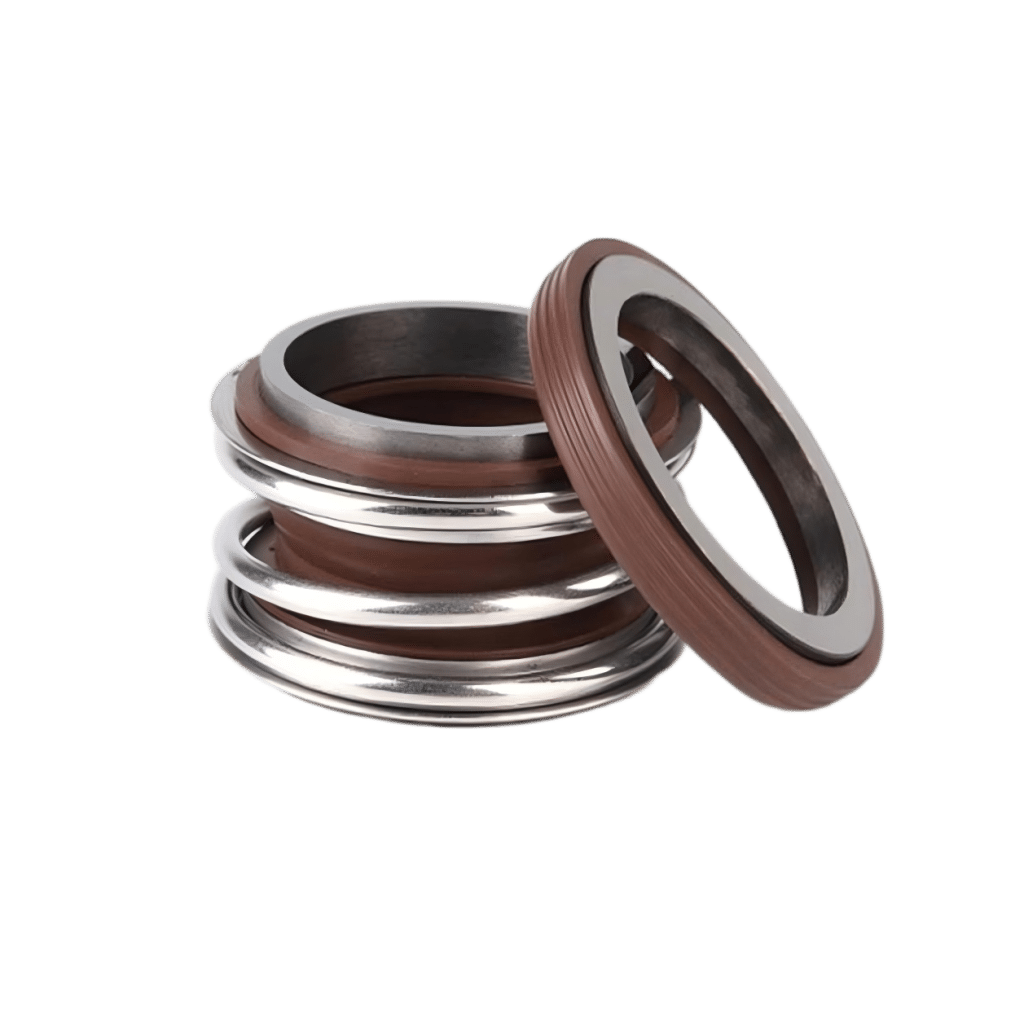
A mechanical seal is a precision sealing device designed to prevent the leakage of fluid media between the rotating shaft and stationary pump body of rotating machinery such as pumps. Unlike traditional packing seals, it relies on the precise fitting of two perpendicular sealing faces (rotating ring and stationary ring) to form a dynamic seal. The core working principle is that the elastic element (such as a spring) applies a preload to the sealing faces, and during operation, a thin and stable liquid film is formed between the two faces to achieve sealing while reducing friction and wear.
What Are the Core Components of Mechanical Seals?
Mechanical seals consist of four key component groups, each with distinct functions that collectively ensure sealing performance:
- Sealing face components: Including rotating ring and stationary ring, which are the core of the seal. Common materials include silicon carbide (SiC), siliconized silicon carbide (SSiC), and carbon graphite. The flatness and surface roughness of the sealing faces directly determine the sealing effect, with typical flatness tolerance controlled within 0.001 mm.
- Elastic components: Such as springs, bellows, etc., which provide continuous preload to maintain the fit of the sealing faces. The spring compression amount is a key parameter; for internal-mounted mechanical seals, the reasonable compression range is usually 3-5 mm.
- Auxiliary sealing components: Mainly O-rings, gaskets, etc., used to seal the gaps between the rotating ring and the shaft, and between the stationary ring and the seal cover. Common materials include fluororubber and perfluoroether rubber, which need to be compatible with the conveying medium.
- Transmission components: Such as set screws, keyways, etc., which realize the synchronous rotation of the rotating ring and the pump shaft, ensuring that the sealing faces can form a stable relative movement.
Common Types and Classification of Mechanical Seals
Mechanical seals for pumps are classified into multiple types based on structural characteristics and application scenarios. The following table summarizes the common types, applicable pump scenarios, and core advantages:
Seal Type | Applicable Pump Scenarios | Core Advantages |
|---|---|---|
Single Mechanical Seal | Centrifugal pumps for clean, non-toxic media such as water supply and general industrial water | Compact structure, easy installation, low cost |
Double Mechanical Seal | Chemical pumps, petrochemical pumps conveying toxic, corrosive, or flammable media | High sealing reliability, zero leakage risk, effectively protecting the environment |
Balanced Mechanical Seal | High-pressure centrifugal pumps with working pressure > 2.5 MPa | Low end face specific pressure, reduced wear, long service life |
Unbalanced Mechanical Seal | Low-pressure pumps with working pressure ≤ 1.6 MPa such as domestic water pumps | Simple structure, low manufacturing precision requirements |
Externally Mounted Mechanical Seal | Pumps conveying media with high solid particle content such as sludge pumps | Sealing faces are not easily contaminated by media, easy to maintain |
Material Selection for Pump Mechanical Seals

Material selection is a key factor affecting the service life and reliability of mechanical seals in pumps. It must be matched with the physical and chemical properties of the conveying medium (temperature, pressure, corrosiveness) and operating parameters. The following table lists common material combinations and their application ranges:
Material Combination (Rotating Ring/Stationary Ring) | Applicable Medium Characteristics | Applicable Pump Working Parameters |
|---|---|---|
SiC/Carbon Graphite | Clean water, weak acid/alkali solutions (pH 3-10) | Temperature: 0-120℃; Pressure: ≤1.6 MPa; Speed: ≤3000 r/min |
SSiC/SSiC | Abrasive media containing solid particles, such as limestone slurry | Temperature: 0-180℃; Pressure: ≤2.5 MPa; Speed: ≤4000 r/min |
316L/Carbon Graphite | Corrosive media such as dilute sulfuric acid and salt water | Temperature: 0-150℃; Pressure: ≤1.6 MPa; Speed: ≤3000 r/min |
2205 Duplex Stainless Steel/SSiC | Strong corrosive media such as chlorine-containing solutions | Temperature: 0-200℃; Pressure: ≤2.0 MPa; Speed: ≤3000 r/min |
Auxiliary sealing materials should also be selected according to the medium: fluororubber is suitable for high-temperature and corrosive media (temperature resistance up to 250℃), while perfluoroether rubber is applicable to strong corrosive media such as strong acids and alkalis.
Key Performance Parameters of Pump Mechanical Seals
The performance of mechanical seals is directly constrained by operating parameters, and reasonable parameter matching is the premise of ensuring the stable operation of pump systems. The following are the core performance parameters and their standard ranges:
Performance Parameter | Standard Range for Pump Applications | Impact on Sealing Performance |
|---|---|---|
Shaft Diameter | 6-200 mm (special cases up to 400 mm) | Determines the size of the seal, and the shaft diameter deviation affects the fit accuracy |
Operating Speed | Centrifugal pumps: ≤3000 r/min; High-speed pumps: ≤8000 r/min | Excessive speed increases the temperature of the sealing face, accelerating wear |
End Face Specific Pressure | Internal-mounted: 0.3-0.6 MPa; External-mounted: 0.15-0.4 MPa | Too high causes overheating; too low leads to reduced sealing performance |
Sealing Face Linear Speed | General type: ≤30 m/s; High-speed type: ≤100 m/s | Affects the formation of the liquid film; excessive speed breaks the liquid film, causing dry friction |
Application of Mechanical Seals in Pumps
Mechanical seals are widely used in various pump types, and their structural design and parameter matching are optimized according to different pump applications. The following focuses on the application characteristics in typical pump systems:
Application in Centrifugal Pumps
Centrifugal pumps are the most widely used pump type in industrial production, and mechanical seals are their core shaft sealing components. In conventional centrifugal pumps for water supply and drainage, single mechanical seals are usually selected, with SiC/carbon graphite as the sealing face material and fluororubber as the auxiliary seal, which can meet the requirements of clean water medium and normal temperature and pressure conditions.
In special centrifugal pump scenarios such as thermal power plant FGD desulfurization spray tower circulating pumps and steel plant flue gas desulfurization circulating pumps, the medium is limestone slurry with strong abrasiveness. Therefore, double mechanical seals or externally mounted mechanical seals with SSiC/SSiC sealing faces are adopted. At the same time, matching [centrifugal pump seal flushing plans](URL) such as PLAN23 or PLAN32 can effectively prevent the accumulation of solid particles on the sealing faces and ensure long-term stable operation.
Application in Chemical Pumps
Chemical pumps convey corrosive, toxic, and flammable media, so the sealing requirements are extremely high. Double mechanical seals are basically used, and the sealing system is designed in accordance with the API 682 standard. For example, in MTO plant pumps, according to the medium characteristics, PLAN53A flushing scheme is selected, which uses external gas to pressurize the isolation liquid, ensuring that the isolation liquid pressure is 0.14 MPa higher than the seal chamber pressure, effectively preventing medium leakage.
[Chemical pump mechanical seal](URL) materials need to have strong corrosion resistance. For example, when conveying chlorine-containing media, 2507 duplex stainless steel is selected for the metal components, and perfluoroether rubber is used for the auxiliary seal to avoid material corrosion and failure.
How to Optimize the Application Effect of Mechanical Seals in Pumps?
- Match the seal type according to the medium risk level: non-toxic and harmless media can use single mechanical seals; toxic and flammable media must use double mechanical seals.
- Optimize the flushing scheme: for clean media, select PLAN11; for media containing particles, select PLAN32; for high-temperature media, select PLAN21 with a cooler.
- Control the installation accuracy: the coaxiality of the pump shaft and the coupling should be ≤0.05 mm, and the perpendicularity of the sealing face should be strictly controlled to avoid installation deviation leading to seal failure.
Selection of Mechanical Seals for Pumps Under API 682 Standard

The API 682 standard is the authoritative standard for mechanical seals in centrifugal pumps and rotary pumps in the petroleum, petrochemical, and natural gas industries, requiring seals to operate continuously for at least 25,000 hours (3 years) under specified conditions. The following table summarizes the key selection criteria of the API 682 standard for pump mechanical seals:
Selection Criterion | Specific Requirements | Applicable Scenarios |
|---|---|---|
Seal Series | Series 1: For general conditions; Series 2: For harsh conditions; Series 3: For high-risk media | Series 3 is selected for toxic and explosive media in petrochemical plants |
Seal Type | Type A/B: Temperature ≤176℃; Type C: Temperature ≤400℃ | Type C is selected for high-temperature media pumps such as steam pumps |
Arrangement Method | Arrangement 1: Single seal; Arrangement 2: Double seal (unpressurized); Arrangement 3: Double seal (pressurized) | Arrangement 3 is selected for media with high solid content |
Following the API 682 standard for selection can significantly improve the reliability of pump mechanical seals and reduce the risk of environmental pollution and safety accidents caused by medium leakage.
Common Failures and Solutions of Pump Mechanical Seals
Mechanical seal failures in pumps are mostly related to material mismatch, installation errors, or improper maintenance. The following table lists common failures, causes, and solutions:
Common Failures | Main Causes | Solutions |
|---|---|---|
Seal Leakage | Sealing face wear, spring failure, O-ring aging, installation deviation | Replace worn sealing faces and springs; select compatible O-ring materials; re-calibrate installation accuracy |
Sealing Face Ablation | Dry friction, blocked flushing system, improper material matching | Check and unblock the flushing system; select appropriate friction pair materials; ensure sufficient lubrication |
Spring Damage | Corrosion by medium, metal fatigue, uneven force during installation | Select corrosion-resistant spring materials; replace springs regularly; ensure uniform installation force |
Vibration-induced Failure | Pump shaft imbalance, bearing wear, pipeline stress transfer | Balance the pump shaft; replace worn bearings; eliminate pipeline stress |
Regular monitoring of operating parameters (temperature, pressure, vibration) can predict potential failures in advance. For example, an abnormal increase in the temperature of the seal chamber may indicate problems with the flushing system, which requires timely inspection and maintenance.
Installation and Maintenance Best Practices for Pump Mechanical Seals

Standardized installation and scientific maintenance are key to extending the service life of mechanical seals. The specific requirements are divided into three stages:
Pre-installation Preparation
Before installation, thoroughly clean the sealing components and the installation surface of the pump to avoid contamination by impurities. Check the pump shaft for wear and bending; the bending degree should not exceed 0.05 mm. Confirm that the model, material, and size of the mechanical seal match the pump requirements, especially the compatibility between the auxiliary seal material and the medium.
For new seals, check the integrity of the spring and the flatness of the sealing face. If there are scratches or defects on the sealing face, replace the seal in time to avoid affecting the sealing effect.
Installation Operation Norms
Apply a thin layer of clean mechanical oil to the sealing face and auxiliary seal to facilitate installation and prevent damage to the O-ring. During installation, ensure that the stationary ring end face is perpendicular to the pump shaft, and evenly tighten the gland bolts to avoid uneven force on the sealing face.
After installation, manually rotate the pump shaft to check if the rotating ring moves flexibly without jamming. Adjust the spring compression amount according to the technical requirements; excessive or insufficient compression will affect the sealing performance and service life.
Daily Maintenance and Monitoring
Regularly inspect the sealing status, and check for leakage at the seal end face and auxiliary seal. For pumps conveying high-temperature media (above 150℃), ensure the normal operation of the cooling system; for media containing particles, regularly clean the filter of the flushing system to prevent blockage.
Establish a maintenance record system, and regularly replace wearing parts parts such as O-rings and springs (generally once every 6-12 months). Monitor the operating parameters in real time; if abnormal temperature rise, vibration, or leakage occurs, stop the machine for inspection immediately to avoid further damage to the seal and pump.