

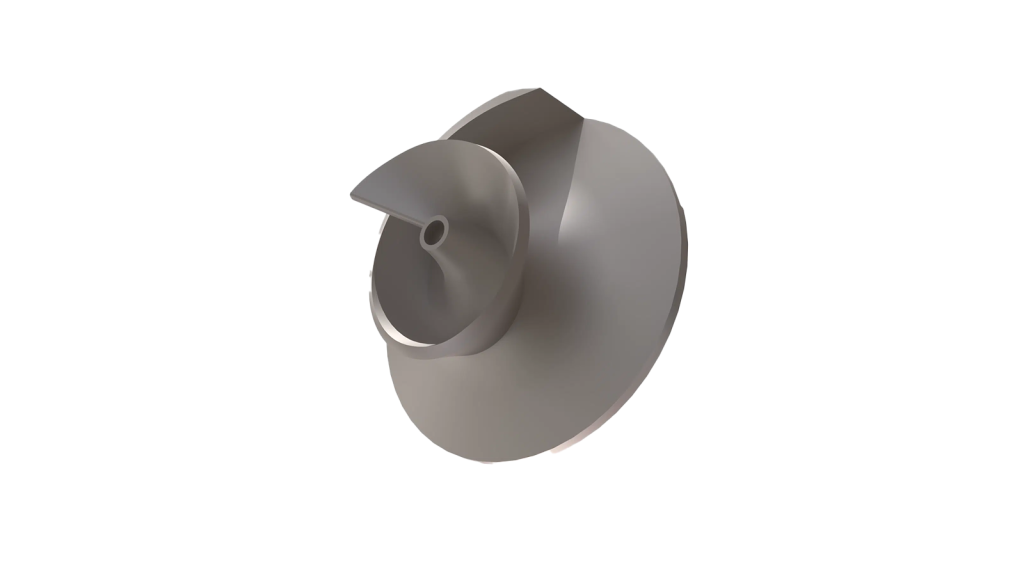










The impeller is the undisputed “heart” of any bomba anti-entupimento. Its design determines the system’s ability to handle high-solid, viscous, and fibrous media without catastrophic failure. For business owners and procurement managers, choosing the wrong design is a $5,200 mistake per downtime incident. This guide demystifies the three primary impeller structures—Open, Semi-Open, and Vortex—to ensure your facility maximizes uptime and ROI.
Principais conclusões
- Application Matching: Open impellers are the gold standard for fibrous and stringy media.
- Strategic Versatility: Semi-open impellers offer the best balance between energy efficiency and clog resistance for mixed-media applications.
- Abrasive Resilience: Vortex impellers are mandatory for high-solid sludge (up to 40%) and abrasive rejeitos mineiros, offering 50–70% less wear than contact-based designs.
- Operational Savings: Switching to the correct design can reduce maintenance costs by 40–50% and downtime by up to 85%.
- Standard Compliance: Always verify that your impeller choice aligns with API 682, HI 9.6.1, or ISO 9906 standards for performance validation.
Why does your impeller design matter?

Padrão bombas centrífugas utilize closed impellers with narrow passages that provide high efficiency but fail instantly when faced with solids or fibers. Non-clog impellers are engineered with wide, accessible flow channels that allow debris to pass through unobstructed.
A strategic impeller choice ensures:
- Elimination of unplanned downtime and emergency repair costs.
- Extension of equipment service life through reduced abrasive wear.
- Optimization of energy efficiency relative to the viscosity of the media.
- Audit readiness and compliance with international standards.
TIP: Before sourcing, quantify your solid concentration. Open impellers struggle above 15% solids, while Vortex impellers excel up to 40%.
Are Open Impellers the best choice for fibrous media?

Open impellers are characterized by vanes that are open on both sides, attached directly to the pump shaft without front or back shrouds. This structure creates the widest possible flow path for problematic materials.
Structural Benefits & Performance
- Superior Fiber Handling: The absence of shrouds prevents rags, hair, and food fibers from wrapping around the impeller.
- Maintenance Efficiency: Clogs are easily accessed, reducing maintenance labor by up to 40% compared to closed designs.
- Cost Efficiency: These are the most affordable impellers to manufacture, lowering initial procurement costs.
- Replaceable Protection: Often paired with wear plates that can be replaced individually, protecting the expensive pump casing from direct damage.
Known Limitations
- Efficiency Loss: Increased turbulence leads to 5–10% lower energy efficiency compared to semi-open models.
- Pressure Struggles: They are not ideal for heavy sludge (above 20% solids) due to lower pressure generation.
Ideal Applications: Municipal sewage containing rags, food processing waste (meat scraps/fibers), and textile wastewater.
How do Semi-Open Impellers balance efficiency?
Semi-open impellers feature a back shroud for structural support but no front shroud. This “middle ground” design is the most versatile option for industrial applications.
Key Performance Drivers
- Increased Stability: The back shroud reduces vane vibration and fluid leakage, extending service life by 20–30% over open impellers.
- Energy Optimization: They are approximately 5–10% more efficient than open designs while maintaining moderate clog resistance.
- Multi-Media Versatility: Capable of handling industrial sludge, viscous chemical waste, and secondary treatment wastewater.
Strategic Considerations
- Fiber Risk: The back shroud can trap long fibers, making this design less suitable for raw sewage with high rag content.
- Large Solids: Clogging risk increases significantly with solids exceeding 3 inches.
TIP: If your facility aims to reduce annual energy costs, semi-open impellers can save approximately $22,000 per year compared to open designs in the right applications.
Why are Vortex Impellers required for abrasive sludge?

Vortex (regenerative) impellers utilize a closed shroud with a single curved vane to create a swirling vortex. Unlike other types, the media rarely touches the impeller itself.
A vantagem do Vortex
- Wear Minimization: Because solids move around the impeller rather than through it, wear is reduced by 50–70% in abrasive environments.
- High-Solid Capacity: These are the only reliable choice for mining tailings or primary sludge with 25–40% solids.
- Large Particle Passage: Large debris, rocks, and 6-inch solids can pass through the vortex flow path unobstructed.
- Exceptional Lifespan: In harsh mining applications, service life can extend to 7 years, compared to 2 years for traditional designs.
Drawbacks for Supply Chain Leaders
- Highest Procurement Cost: The complexity of the design results in the highest upfront price point.
- Hydraulic Inefficiency: The vortex motion creates high turbulence, resulting in 10–15% lower energy efficiency than open models.
Ideal Applications: Mining tailings, heavy primary sludge, and construction wastewater containing rocks and sand.
Critical Comparison: Selecting Your Impeller

| Caraterística | Open Impeller | Semi-Open Impeller | Vortex Impeller |
|---|---|---|---|
| Solid Capacity | ≤15% solids | 10–25% solids | 25–40% solids |
| Fiber Handling | Excellent (No wrapping) | Moderate (Risk of wrapping) | Poor (Wrapping risk) |
| Resistência ao desgaste | Low (Vanes exposed) | Moderado | High (Minimal contact) |
| Eficiência | Moderado | High (Most efficient) | Baixa |
| Upfront Cost | Lowest | Moderado | Highest |
| Vida útil | 1–2 Years | 2–3 Years | 5–7 Years |
Actionable Insights for Decision-Makers
Para gestores de aquisições
- Match Metallurgy to Design: Always specify wear-resistant materials like Aço inoxidável duplex or High-Chrome Iron, particularly for Open impellers where vanes are fully exposed.
- Evaluate TCO: A Vortex impeller may cost more initially but can save $180,000 over five years in replacement costs for mining facilities.
Para operadores de instalações
- Monitor Wear Plates: For Open and Semi-open designs, regular inspection of wear plates is mandatory to prevent expensive casing damage.
- Avoid High Flow for Vortex: Vortex impellers are hydraulically inefficient at high flow rates; use Semi-open designs for high-volume, moderate-solid tasks.
Para proprietários de empresas
- Critical System Prioritization: Ensure your primary sludge transfer systems use the most robust design (Vortex) to avoid the $5,200 “downtime tax”.
- Standardization: Partner with suppliers offering local spare parts for your chosen design to minimize lead times during emergencies.
TIP: Train staff to recognize early signs of impeller wear, such as increased vibration or reduced flow, to prevent catastrophic system failure.
Erros comuns na seleção que devem ser evitados
- Using Open Impellers for Abrasive Sludge: This leads to rapid vane erosion and frequent replacements in media with >15% solids.
- Using Vortex for High Flow: This causes energy costs to spike by 10–15% without providing hydraulic benefits.
- Ignoring Fiber Content with Vortex Designs: Fibers can still wrap around the single vane of a Vortex impeller, leading to clogs in textile or municipal raw sewage applications.
- Prioritizing Upfront Price: Choosing a cheap open impeller for a harsh mining application will result in a TCO that is 40–50% higher over five years.
Conclusion: Securing Your Operational ROI
Selecting the right non-clog impeller is not merely a technical choice; it is a critical investment in your facility’s profitability. Open impellers remain the champion for fibrous media, while semi-open designs offer the efficiency needed for mixed industrial waste. For the most demanding, abrasive, and high-solid environments, the Vortex impeller is the only choice that ensures long-term reliability. By aligning your impeller design with your specific media characteristics, you can effectively eliminate 85% of unplanned downtime.
FAQ
1. Which impeller type is best for municipal sewage with high rag content?
Open impellers are generally the best choice for fibrous and stringy media like rags and hair because they have no shrouds for materials to wrap around.
2. Can I use a Vortex impeller if my priority is energy efficiency?
No. Vortex impellers are the least efficient non-clog design, often 10–15% less efficient than other types due to the turbulence created by the vortex motion. Semi-open impellers are the most efficient.
3. How long do non-clog impellers typically last in abrasive media?
Vortex impellers last the longest (5–7 years) because solids don’t hit the vanes directly. Semi-open impellers typically last 2–3 years, while open impellers last 1–2 years in abrasive conditions.
4. Are Vortex impellers effective at handling large rocks or debris?
Yes. Vortex impellers can pass solids up to 6 inches in diameter because they create a large, unobstructed flow path through a swirling vortex.
5. What is the “Total Cost of Ownership” (TCO) advantage of choosing a more expensive impeller?
A more expensive design like a Vortex impeller can reduce maintenance costs by 40–50% over five years by eliminating clogs and extending the time between replacements.


