













What is O-Ring?

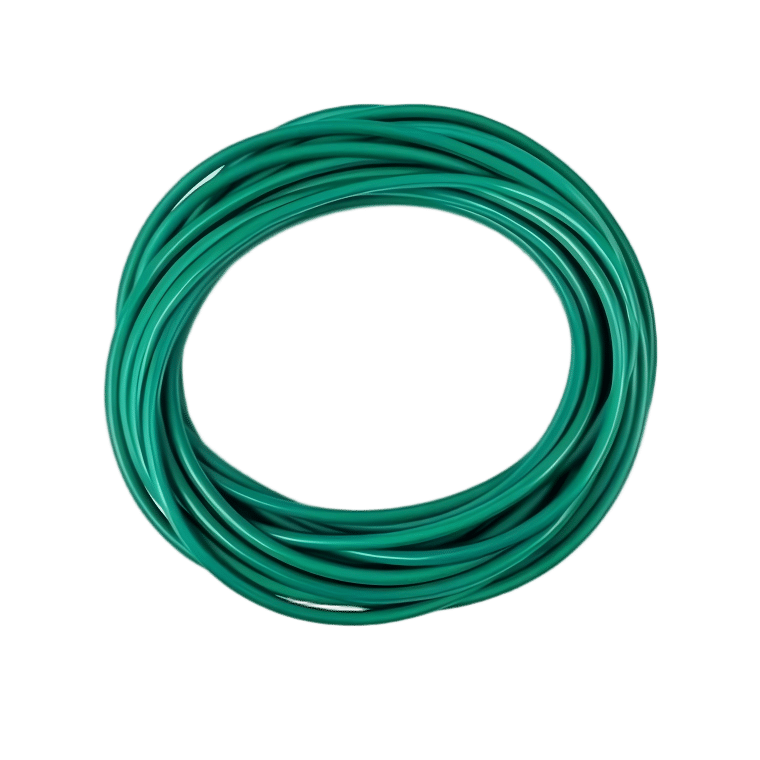
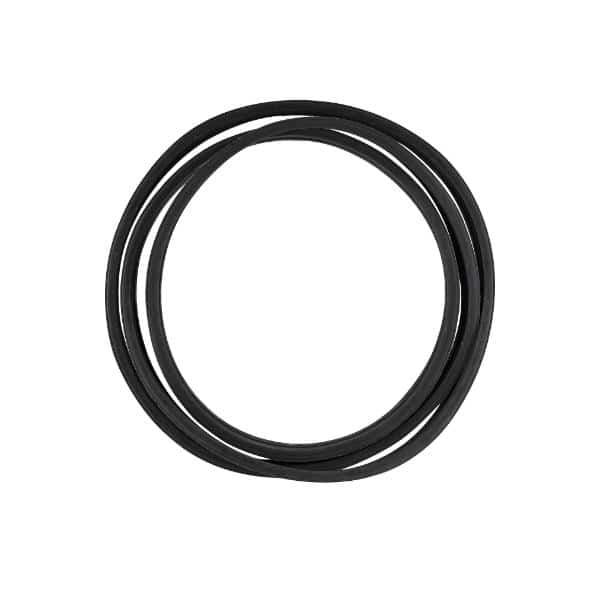
O-Ring is a circular cross-section sealing element made of elastic materials, which belongs to the category of extrusion-type seals. Its core working principle relies on the initial compression deformation generated when installed in the seal groove, forming an initial sealing force; under the action of system pressure, the sealing force increases synchronously, realizing reliable sealing of fluids or gases. As a bidirectional sealing component, O-Ring has the advantages of compact structure, easy installation, low cost, and wide applicability, and is widely used in static and dynamic sealing scenarios of pump systems.
The key performance indicators of O-Ring include compression set rate, temperature resistance, pressure resistance, corrosion resistance, and wear resistance. These indicators determine its adaptability to different pump working conditions. For example, in high-temperature pump systems, the O-Ring’s continuous operating temperature resistance needs to match the medium temperature, and the compression set rate should be controlled below 15% to ensure long-term sealing stability.
O-Ring Material Selection: Performance and Application Matching
The material of O-Ring is the fundamental factor determining its performance. Common materials include nitrile rubber (NBR), fluororubber (FKM), perfluoroelastomer (FFKM), and silicone rubber. The selection of materials must be based on the pump’s working medium, temperature, pressure, and other operating conditions. The following table lists the performance parameters and typical pump application scenarios of common O-Ring materials:
Тип материала | Ключевые параметры производительности | Typical Pump Applications |
|---|---|---|
NBR (Nitrile Rubber) | Temperature range: -40℃~120℃; Compression set rate: <20%; Excellent oil resistance; Good wear resistance | Ordinary centrifugal pumps, oil transfer pumps, agricultural irrigation pumps |
FKM (Fluororubber) | Temperature range: -20℃~200℃; Compression set rate: <15%; Superior corrosion resistance; High-pressure resistance (≥30MPa) | Chemical centrifugal pumps, high-temperature hot water pumps, petrochemical pump systems |
FFKM (Perfluoroelastomer) | Temperature range: -25℃~260℃; Compression set rate: <10%; Universal chemical resistance; Long service life (≥5000h) | High-purity chemical pumps, semiconductor process pumps, extreme temperature/pressure pump systems |
Silicone Rubber | Temperature range: -60℃~230℃; Excellent low-temperature flexibility; Good electrical insulation; Poor oil resistance | Low-temperature refrigeration pumps, food-grade centrifugal pumps, clean water supply pumps |
Material aging is a key factor affecting O-Ring service life. Taking FKM as an example, under hot air aging conditions at 200℃, its service life can reach more than 2700h; when the temperature rises to 240℃, the compression set rate increases significantly, and the service life is greatly shortened. Therefore, material selection must fully consider the long-term operating temperature of the pump system.
How Does O-Ring Structure Affect Sealing Performance in Pumps?
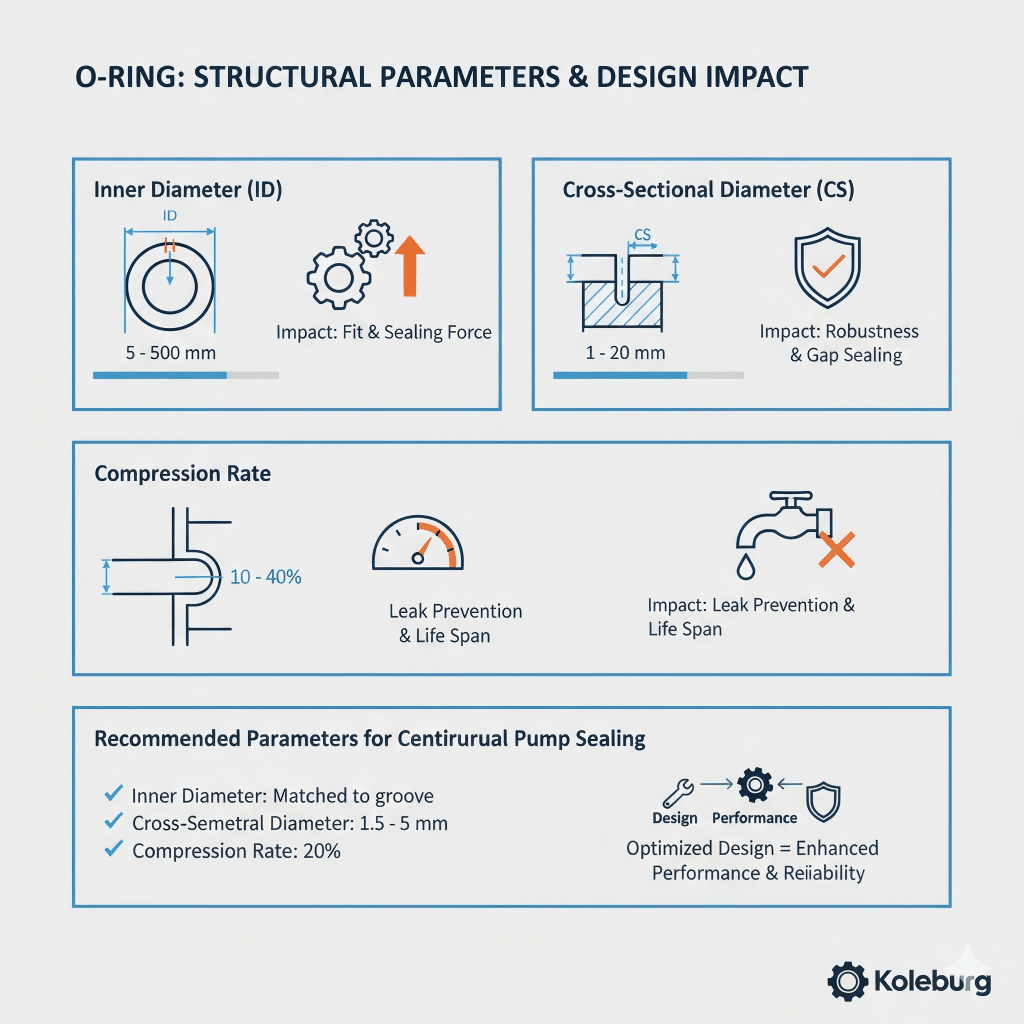
The structural parameters of O-Ring, including inner diameter, cross-sectional diameter, and compression rate, directly determine its sealing effect in pump systems. The following are the key structural design points and their impact on performance:
- Compression rate selection: For static sealing in pumps (such as flange connections), the compression rate is usually 15%-30%; for dynamic sealing (such as pump shaft seals), the compression rate is 9%-25%. Excessive compression rate will accelerate material aging, while insufficient compression rate will lead to leakage.
- Cross-sectional diameter matching: The cross-sectional diameter of O-Ring should be compatible with the pump’s seal groove size. When the working pressure exceeds 5MPa, it is necessary to configure retaining rings to prevent O-Ring extrusion damage.
- Inner diameter adaptation: For internal pressure pump sealing (such as pump housing internal seals), the O-Ring inner diameter should be slightly smaller than the groove inner diameter to ensure tensile fit; for external pressure sealing (such as pump shaft end seals), the inner diameter should be consistent with the groove inner diameter to avoid diameter reduction under pressure.
The following table shows the recommended structural parameters of O-Ring for common centrifugal pump sealing scenarios:
Centrifugal Pump Sealing Scenario | Recommended Compression Rate | Cross-Section Diameter Range (mm) |
|---|---|---|
Pump flange static seal | 20%-25% | 2.65-5.33 |
Pump shaft dynamic seal | 12%-18% | 3.53-6.99 |
Impeller seat seal | 18%-22% | 4.45-7.00 |
High-pressure pump housing seal (≥15MPa) | 22%-28% | 5.33-9.53 |
Application of O-Ring in Various Pumps
O-Ring plays a crucial role in pump systems, and its selection and application vary according to pump types and working conditions. The following focuses on its application in common pump types such as centrifugal pumps, deep well pumps, and fire pumps:
1. Центробежные насосы
Centrifugal pumps are the most widely used pump type in industrial production, and O-Ring is widely used in their key sealing parts such as flanges, pump shafts, impeller seats, and mechanical seal chambers. The performance of O-Ring directly affects the overall efficiency and operation stability of centrifugal pumps.
Тип центробежного насоса | O-Ring Application Requirements | Влияние применения |
|---|---|---|
Химические центробежные насосы | Material: FKM/FFKM; Corrosion resistance to strong acids/alkalis; Temperature resistance: -20℃~200℃ | Leakage rate ≤0.01ml/min; Service life ≥3000h; Adapt to various chemical media |
High-Pressure Centrifugal Pumps | Material: FKM; Compression rate: 22%-28%; Equipped with PTFE retaining rings | Stable sealing under pressure up to 30MPa; No extrusion damage; Low maintenance frequency |
Industrial Centrifugal Pumps | Material: NBR; Wear resistance; Good compatibility with lubricating oil | Cost-effective; Sealing reliability ≥99%; Suitable for large-scale industrial water supply |
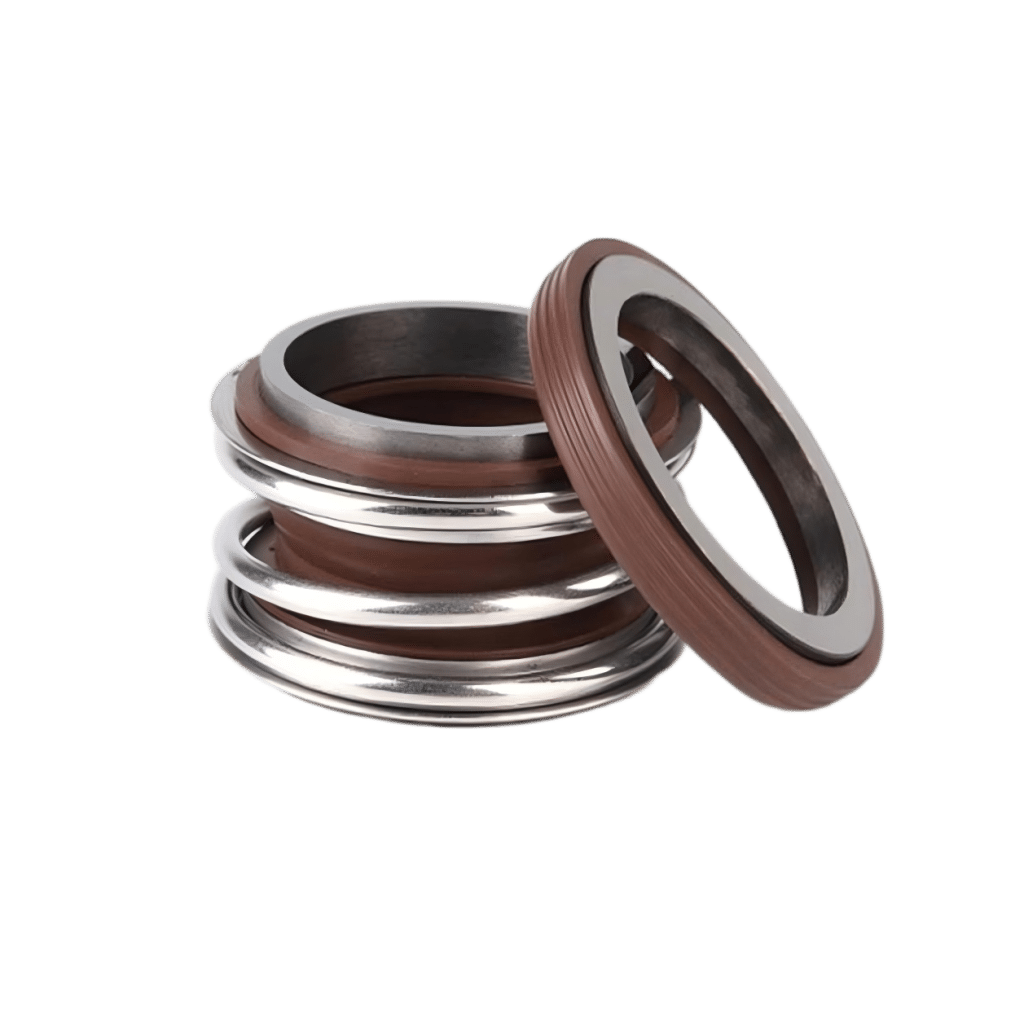
In centrifugal pump shaft seals, O-Ring cooperates with centrifugal pump mechanical seal to form a double sealing system. The optimized O-Ring can reduce the friction coefficient between the mechanical seal and the shaft, reducing energy loss by 5%-8%.
2. Насосы для глубоких скважин
Deep well pumps work in deep underground environments, with harsh working conditions such as high pressure, high humidity, and possible sand-containing media. O-Ring is mainly used in the connection parts of pump sections and the sealing of motor shafts, requiring excellent water resistance and wear resistance.
- Material selection: Usually NBR or FKM with good water resistance; for deep well pumps in saline-alkali areas, FKM with corrosion resistance is preferred.
- Structural requirements: Adopt large cross-sectional diameter (≥5.33mm) to enhance wear resistance; the compression rate is controlled at 18%-22% to adapt to the deformation caused by deep well pressure.
- Application effect: Effectively prevent well water intrusion into the pump body and motor; reduce the failure rate of deep well pumps by 40%-60%; service life in clean well water can reach more than 5000h.
3. Пожарные насосы
Fire pumps require reliable sealing performance in emergency situations, and O-Ring is used in their pump body flanges, check valves, and pressure relief valves. It needs to have high temperature resistance and rapid sealing response capabilities.
Сценарий применения пожарного насоса | O-Ring Technical Parameters | Основные преимущества |
|---|---|---|
High-Rise Building Fire Protection | Material: FKM; Temperature resistance: -20℃~200℃; Pressure resistance: ≥1.6MPa | Rapid sealing response; No leakage under high pressure; Adapt to complex building pipeline environments |
Power Plant Fire Protection | Material: FFKM; Universal chemical resistance; Compression set rate <10% | Resist high-temperature flue gas corrosion; Long-term standby stability; Service life ≥8000h |
Chemical Plant Fire Protection | Material: FKM; Corrosion resistance to chemical fire-extinguishing agents; Wear resistance | Compatible with various fire-extinguishing media; No performance degradation after long-term storage |
Key Factors Affecting O-Ring Sealing Performance in Pumps

The sealing performance of O-Ring in pump systems is affected by multiple factors, including material quality, structural design, installation process, and working conditions. Understanding these factors is crucial for optimizing sealing effect and extending service life:
- Working medium influence: Acidic, alkaline, and oily media will cause swelling, aging, or dissolution of O-Ring materials. For example, NBR materials will swell by more than 30% in strong oxidizing media, leading to sealing failure.
- Temperature effect: Exceeding the material’s temperature resistance range will accelerate aging. When FKM is used at 220℃ for a long time, its hardness increases by 30%-40%, and elasticity decreases significantly.
- Installation quality: Impurities in the seal groove, scratches on the O-Ring surface, or improper compression rate will all lead to leakage. The qualified rate of O-Ring installation directly affects the sealing reliability by more than 60%.
- Pressure fluctuation: Frequent pressure fluctuations in pump systems will cause repeated deformation of O-Ring, accelerating fatigue damage. The service life of O-Ring under frequent pressure fluctuations will be reduced by 30%-50%.
O-Ring Selection and Maintenance in Pump Systems
Принципы отбора
The selection of O-Ring for pump systems should follow the principle of “matching working conditions, ensuring performance, and balancing cost-effectiveness”:
- Medium adaptation: According to the chemical properties of the pumped medium, select materials with corresponding corrosion resistance. For example, in strong acid media, FKM or FFKM should be selected instead of NBR.
- Temperature matching: The continuous operating temperature of O-Ring should be 10℃-20℃ lower than the maximum temperature resistance of the material to reserve a safety margin.
- Pressure adaptation: For high-pressure pump systems (≥10MPa), select materials with high hardness and configure retaining rings to prevent extrusion damage.
- Sealing type matching: Static sealing selects a higher compression rate, and dynamic sealing selects a lower compression rate to balance sealing effect and wear resistance.
Maintenance Recommendations
Scientific maintenance can effectively extend the service life of O-Ring in pump systems. The following are key maintenance measures:
- Regular inspection: Check the O-Ring for aging, cracking, swelling, and wear every 3-6 months. For pumps in harsh working conditions, the inspection cycle should be shortened to 1-2 months.
- Correct installation: Before installation, thoroughly clean the seal groove and O-Ring surface; apply a thin layer of compatible lubricant (such as silicone oil) to reduce installation friction and avoid surface scratches.
- Timely replacement: When the O-Ring has obvious deformation or the pump has slight leakage, replace it immediately. The recommended replacement cycle for O-Ring in normal working conditions is 12-18 months.
- Storage conditions: Spare O-Rings should be stored in a cool, dry, and dark environment, avoiding direct sunlight and contact with oil, chemicals, and other substances. The storage temperature should be controlled at 0℃-25℃.
O-Ring Quality Control and International Standards

The quality of O-Ring is the basis for ensuring the sealing performance of pump systems. Strict quality control should be implemented throughout the production process, including raw material inspection, process control, and finished product testing. Raw material inspection mainly includes material composition analysis and performance testing; process control focuses on compression molding temperature and time to ensure consistent product performance; finished product testing includes dimensional accuracy, compression set rate, and aging resistance testing.
O-Ring production and application must comply with relevant international standards, such as ISO 3601 (Rubber O-rings for static and dynamic applications in fluid power systems and general industrial applications). This standard specifies the dimensional tolerance, material requirements, and testing methods of O-Ring, providing a unified technical basis for the industry. Koleburg strictly implements ISO quality control standards, and each batch of O-Ring undergoes 100% finished product inspection before leaving the factory, ensuring product quality and reliability.
Customization of O-Ring for Special Pump Working Conditions
In some special pump working conditions (such as extreme temperature, high pressure, and special media), standard O-Ring cannot meet the requirements, and customized O-Ring is needed. Koleburg has rich O-Ring customization experience, providing comprehensive customization solutions for special pump systems:
- Material customization: Provide special materials such as FFKM and high-temperature resistant silicone rubber to adapt to extreme working conditions.
- Dimensional customization: Design non-standard inner diameter and cross-sectional diameter according to the pump’s special seal groove size, with dimensional tolerance controlled within ±0.02mm.
- Process customization: Adopt special surface treatment processes such as anti-static and low-friction coating to meet the requirements of special working conditions such assemiconductor pump systems.
- Batch customization: Flexible production to meet small-batch trial and large-batch procurement needs of pump manufacturers.
Future Development Trends of O-Ring for Pumps

With the continuous development of pump technology towards high efficiency, energy saving, and intelligence, O-Ring for pumps is also developing in the direction of high performance, long life, and intelligence:
- New material application: Develop high-performance composite materials, such as carbon fiber-reinforced rubber, to improve O-Ring’s wear resistance and pressure resistance while reducing weight.
- Intelligent monitoring: Integrate micro-sensors into O-Ring to monitor temperature, pressure, and wear status in real time, realizing predictive maintenance of pump sealing systems.
- Green environmental protection: Develop environmentally friendly rubber materials that are easy to degrade and have low VOC emissions, meeting the increasingly strict environmental protection requirements of the industrial field.
- Precision manufacturing: Adopt intelligent manufacturing technologies such as 3D printing to improve the dimensional accuracy and production efficiency of O-Ring, realizing personalized customization on a large scale.